 Feeding Module
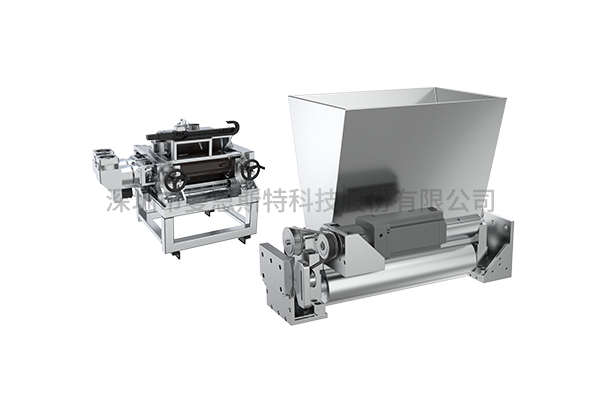
The feeding module serves as auxiliary equipment for film-forming material supply. Mannster has engineered four core systems: steel-belt pre-film formers, counter-roller pre-film formers, powder dispensing feeders, and vibration feeders. Powder dispensing feeders automate traditional manual powder spreading; steel-belt and counter-roller systems resolve industry-wide defects of uneven distribution and poor film formation—delivering industry-leading solutions; vibration feeders enable real-time adjustable lateral powder distribution, subsequently integrating with areal density detection to achieve closed-loop control for dry electrode film formation.
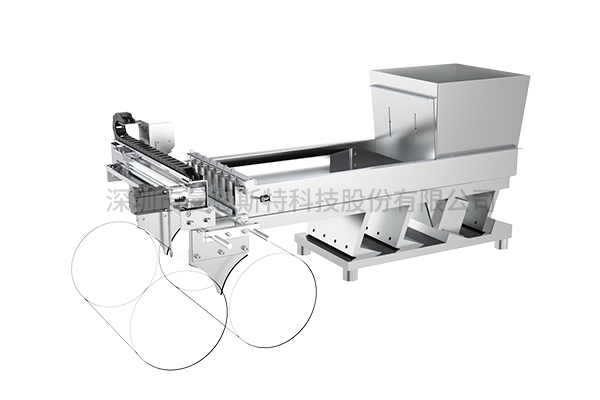 Vibratory FeedingBy utilizing a vibration mechanism, an electric actuator, and a distance sensor, closed-loop control is achieved. This enables stable, metered, and fully automatic material feeding, meeting the material handling requirements of various industries.Detailed Introduction
Product advantages
1、The gap is adjusted via an electric actuator to control the discharge rate across different zones, ensuring uniform material output in all areas.
2、A laser distance sensor detects powder levels in various zones, providing feedback to both the vibration feeding mechanism and the electric actuator. This enables precise control of discharge rates in each zone, achieving uniform and fully automated material supply.
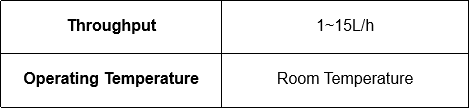
Product Parameters
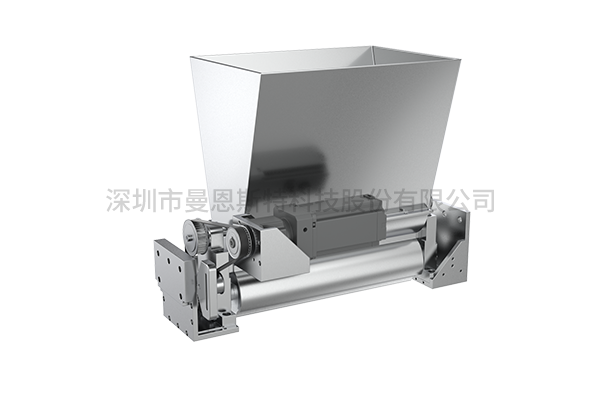 Powder DispensingPowder is applied onto the roll via a metering roll, which quantitatively dispenses the fibrillated powder material into the roll gap, while a scraper cleans the surface of the metering roll.Detailed Introduction
Product advantages
1、Roll gap powder feeding serves as a mechanized replacement for manual powder application, enabling automated powder distribution through metering and detection functions.
2、It ensures quantitative delivery of powder material.
Product Parameters

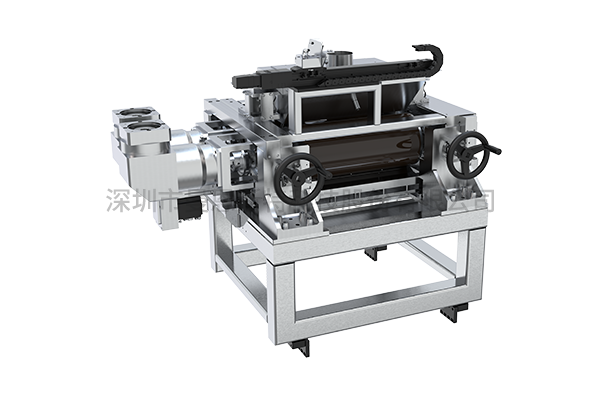 Roll-to-Roll Pre-forming SystemThe process utilizes two electromagnetic heating rolls that rotate in opposite directions, with one of the rolls additionally performing axial reciprocating motion. This mechanism compresses the fibrillated powder material into a pre-formed sheet, achieving a preliminary film of specified thickness. This step prepares the material for subsequent calendering and thinning operations, while maximizing the consistency of areal density and thickness in the final film.Detailed Introduction
Product advantages
1、Precise Temperature Control: roll surface uniform temperature zone ≥300 mm, max 200°C, tolerance ±1°C.
2、Pressure Monitoring: Real-time film forming pressure monitoring, range 0–2T.
3、Cathode/Anode Compatible: Tungsten carbide roll coating ensures high hardness, wear resistance, and suitability for both cathode and anode powder pre-forming.
Product Parameters
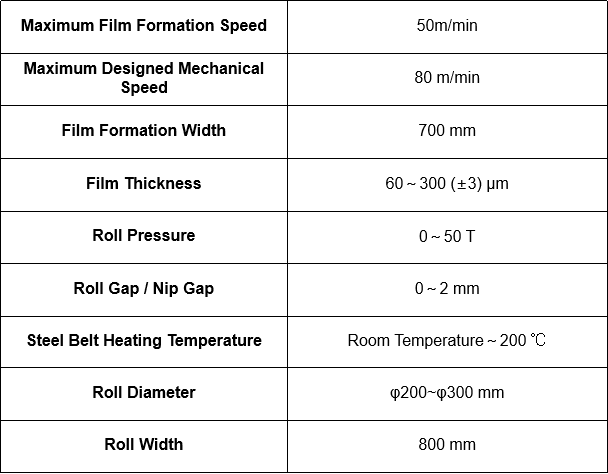
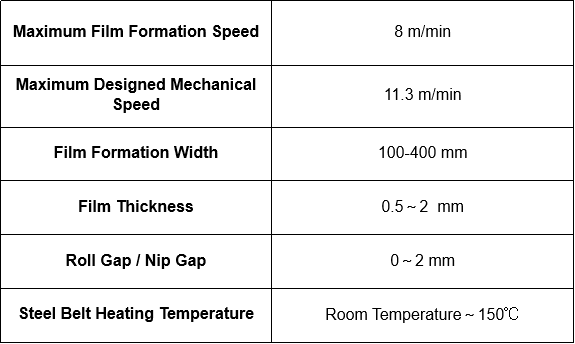
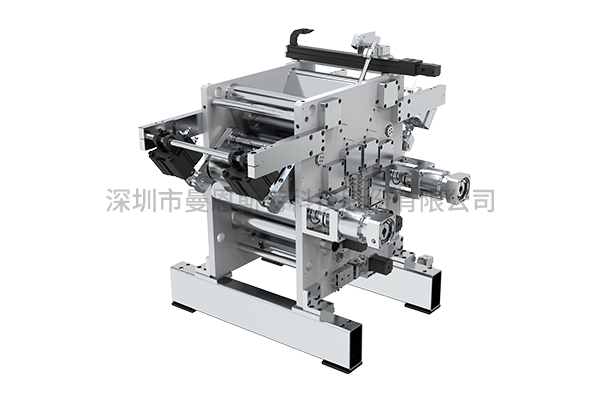 Steel Belt Pre-forming SystemThe steel belt pre-forming unit pre-compacts electrodel powder into a thick film sheet and delivers metered, continuous, and stable feeding to the multi-roll calendering and thinning equipment. The unit uses two symmetrically arranged endless steel belts that continuously convey powder into a wedge-shaped outlet. As the powder passes through this gradually narrowing gap, its volume is progressively reduced until it is compacted into a film. This wedge-shaped mechanism significantly increases film compaction density while improving thickness and density uniformity.Detailed Introduction
Product advantages
1、Ensures metered, continuous, and stable feeding to prevent film defects such as gaps, pores, or cracks caused by uneven or interrupted material supply.
2、Significantly improves film compaction density by using a wedge-shaped mechanism that provides a long, gradual compression path—equivalent to an extremely large roll—allowing slow, sustained pressure for higher density.
3、Enhances uniformity in thickness and density: the extended compression allows powder to flow laterally for even density, while pre-compacted feeding ensures consistent thickness compared to loose powder methods.
Product Parameters
- Add:
NO.3, Zhukeng Third Industrial Zone, Jinniu East Road, Pingshan District, Shenzhen
- Tel:
0755-89369630
- Mob:
400-822-5968
- E-mail:
brand@sz-manst.com
-
 Wechat
 -
 Channels
 -
 Duoyin